While thinking about this year’s black history month I couldn’t help but contemplate the history makers of our past. I realized we could go back generation by generation to chronicle the many heroes and sheroes of our past and their reactions to the realities of their day. But, because I like to focus on everyday heroes, those of us who are unsung but heroic in our daily struggles with the system, I’d like to highlight the history of our community.
To understand where we are today and how to move forward, let’s contemplate how we moved in the past. The following generational breakdown draws upon cultural and historical realities. These generations are defined not merely by chronological birth years, but by shared historical trauma, collective triumphs, and adaptive cultural strategies that create a distinct generational consciousness. Here is a breakdown of Black American generations from 1865 to the present accompanied by the soundtracks of their lives.
The Emancipation Generation (b. 1865–1890)
They were born into freedom’s promise and raised as it was stolen back. The Emancipation Generation experienced Reconstruction’s radical hope—voting, office-holding, land ownership, institution-building—and then watched it all violently dismantled by Jim Crow, the Klan, and the “Redemption” of the South. Psychologically shaped by radical hope curdling into defensive disillusionment, they built the foundational institutions of free Black life: HBCUs, independent Black churches, the Black press. They were the bridge generation, the ones who first had to answer the question that would haunt every generation after: What do you build when you are born free but surrounded by the ruins of a broken promise?
SOUNDTRACK:
- Fisk Jubilee Singers – “Swing Low, Sweet Chariot,” “Go Down Moses”
- Work songs and field hollers – passed orally, never recorded
- Brass bands – played for parades and social functions
- The Hyers Sisters – concert spirituals and art songs
The Gone North Generation (b. 1890–1925)
They made a world-altering calculation: staying in the Jim Crow South meant social death, and leaving meant betting everything on an industrial North. The Gone North Generation boarded trains with cardboard suitcases and built the Black Metropolis from scratch—Harlem, Bronzeville, Paradise Valley—carrying Southern folkways into urban centers and transforming them into new cultural forms. Psychologically defined by the duality of displacement trauma and messianic hope, they proved that movement itself could be resistance. They laid the urban foundation upon which every subsequent generation would build.
SOUNDTRACK:
- Bessie Smith – “Downhearted Blues”
- Ma Rainey – “See See Rider”
- Mamie Smith – “Crazy Blues” (first blues recording by a Black artist, 1920)
- Scott Joplin – “Maple Leaf Rag”
- King Oliver’s Creole Jazz Band (featuring Louis Armstrong)
- Bert Williams – “Nobody”
The Unbroken Generation (b. 1925–1945)
They came of age watching their parents build new lives in northern cities, only to crash into the Great Depression and a northern Jim Crow. But their defining moment was World War II: fighting fascism abroad in a segregated military while denied human rights at home. The hypocrisy left them broke but unbroken—permanently conscious of America’s lies and unwilling to accept them. They returned with militant pragmatism, organized unions, funded the NAACP‘s legal strategy, and raised the generation that would launch a mass movement. They didn’t march in the streets—they built the ground beneath the marchers’ feet.
SOUNDTRACK:
- Duke Ellington – “It Don’t Mean a Thing,” “Take the ‘A’ Train”
- Count Basie – “One O’Clock Jump”
- Billie Holiday – “Strange Fruit,” “God Bless the Child”
- Mahalia Jackson – “Move On Up a Little Higher”
- Big Bill Broonzy – “Key to the Highway”
- Sister Rosetta Tharpe – “Strange Things Happening Every Day”
The Black Power Generation (b. 1945–1965)
They are the giants. The Black Power Generation launched the most successful mass movement for human rights in American history, moving from legal victory to direct action to the revolutionary declaration that “Power to the People.” They integrated schools, lunch counters, and voting booths while facing firehoses, dogs, and bombs. Psychologically, they completed a monumental shift: from seeking legitimacy from white America to defining it internally, from demanding inclusion to demanding self-determination. They created new political ideologies and organizations such as: The Black Panther Party, Nation of Islam, and Student Nonviolent Coordinating Committee. Their cultural signature moved from gospel freedom songs to the funk and soul of Black ownership. They are African America’s greatest generation, not because they won everything, but because they dared to demand everything with their bodies as the offering.
SOUNDTRACK:
- Sam Cooke – “A Change Is Gonna Come”
- James Brown – “Say It Loud—I’m Black and I’m Proud,” “Papa’s Got a Brand New Bag”
- Aretha Franklin – “Respect,” “Think”
- The Impressions (Curtis Mayfield) – “People Get Ready,” “Keep On Pushing”
- Nina Simone – “Mississippi Goddam,” “To Be Young, Gifted and Black”
- John Coltrane – “Alabama”
- The Freedom Singers – “We Shall Overcome”
- Marvin Gaye (early Motown) – “How Sweet It Is,” “Pride and Joy”
- The Temptations – “My Girl,” “Ain’t Too Proud to Beg”
The Post-Soul Generation (b. 1965–1985)
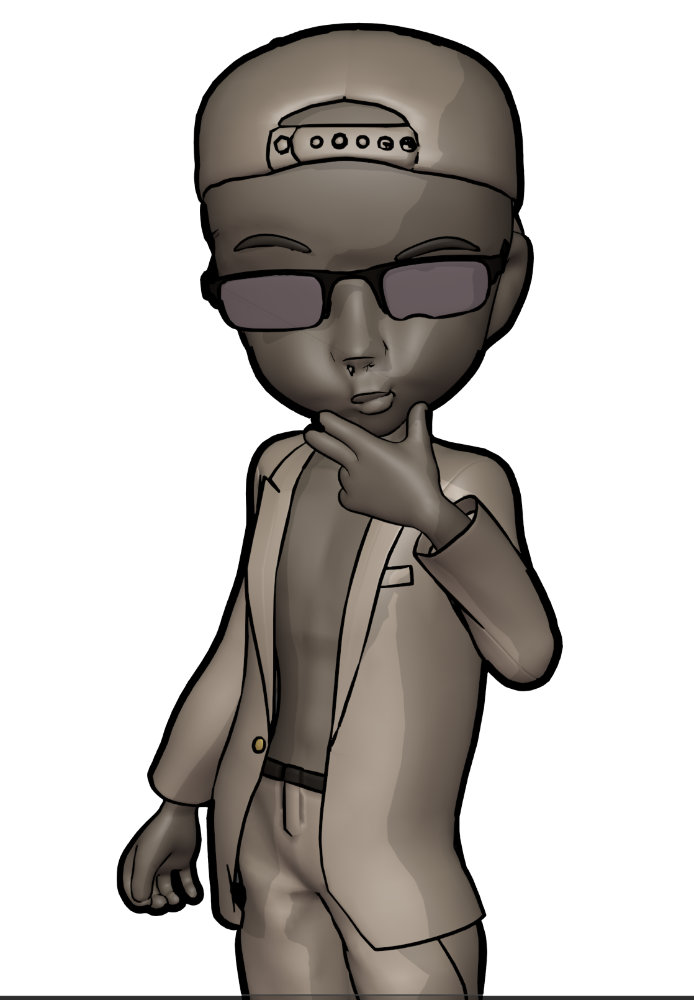
They inherited the victories and immediately discovered that victory was complicated. The Post-Soul Generation navigated integration’s possibilities alongside deindustrialization, the War on Drugs, and mass incarceration. Psychologically marked by duality and code-switching as survival tools, they learned to perform acceptance while maintaining internal allegiance. Culturally, they gave birth to hip-hop as epistemology—a way of seeing, naming, and critiquing the world that told the truth about its contradictions. Caught between the dreams of integration and the reality of structural neglect, they turned that dissonance into the most influential cultural movement of the late twentieth century.
SOUNDTRACK:
- Marvin Gaye – “What’s Going On,” “Inner City Blues”
- Stevie Wonder – “Living for the City,” “Songs in the Key of Life”
- Parliament-Funkadelic – “One Nation Under a Groove,” “Flash Light”
- Curtis Mayfield – “Superfly,” “Move On Up”
- The O’Jays – “For the Love of Money,” “Love Train”
- Donna Summer – “I Feel Love,” “Last Dance”
- Grandmaster Flash & the Furious Five – “The Message”
- The Sugarhill Gang – “Rapper’s Delight”
- Bob Marley – “Exodus,” “I Shot the Sherif”
The Hip-Hop Generation (b. 1985–2000)
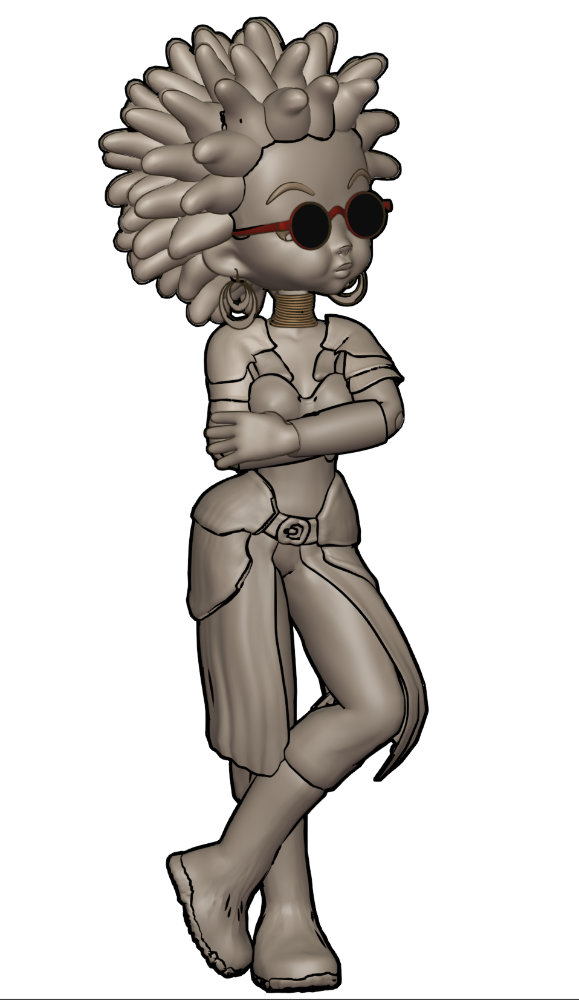
They were the first to breathe hip-hop as the air of their entire lives. The Hip-Hop Generation came of age in the aftermath of the crack epidemic and the rise of mass incarceration, watching the “colorblind” myth shatter against the realities of Rodney King, the O.J. trial, and driving while Black. They were also the first digital natives, using early internet tools to build community beyond geography. Psychologically marked by connected consciousness, they were pragmatic, entrepreneurial, and deeply aware of the gap between post-racial rhetoric and lived reality. Hip-hop became global under their watch, and they became its ambassadors, critics, and entrepreneurs.
SOUNDTRACK:
- Public Enemy – “Fight the Power,” “Don’t Believe the Hype”
- N.W.A. – “F*ck tha Police,” “Straight Outta Compton”
- 2Pac – “Dear Mama,” “Brenda’s Got a Baby”
- The Notorious B.I.G. – “Juicy,” “Big Poppa”
- Lauryn Hill – “Doo Wop (That Thing),” “The Miseducation of Lauryn Hill”
- Mary J. Blige – “Real Love,” “My Life”
- A Tribe Called Quest – “Can I Kick It?,” “Scenario”
- Whitney Houston – “I Will Always Love You,” “I’m Every Woman”
- Dr. Dre – “Nuthin’ but a ‘G’ Thang,” “The Chronic”
- Aaliyah – “One in a Million,” “Are You That Somebody?”
The #BLM Generation (b. 2000–Present)
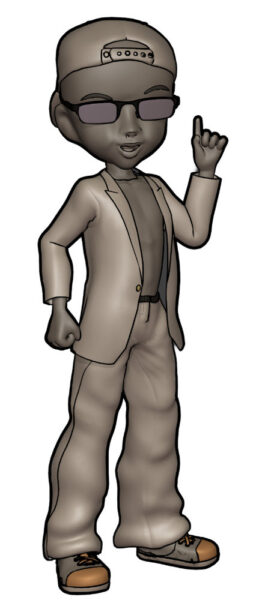
The #BLM Generation is a work in progress. This generation grew up with a Black president and the simultaneous backlash that proved his presidency hadn’t ended racism—it had only exposed its persistence. They came of age watching Black mortality go viral: Trayvon Martin, Michael Brown, George Floyd, their murders documented on smartphones and disseminated through hashtags. Psychologically defined by trauma-informed activism, they reject respectability politics and understand intersectionality. Their exodus is digital—a migration from mainstream narratives into spaces where they control their own stories. They are the most formally educated and globally connected generation of Black Americans ever, but can they challenge the oppressor using the oppressor’s own tools? That remains to be seen. They’re forced to face 21st century white supremacy while striving to build something fundamentally new: true freedom that is networked, holistic, and self-determining.
SOUNDTRACK:
- Kendrick Lamar – “Alright,” “The Blacker the Berry”
- Beyoncé – “Formation,” “Freedom,” “Black Parade”
- Chance the Rapper – “Cocoa Butter Kisses,” “No Problem,” “Acid Rain”
- SZA – “Ctrl,” “Good Days”
- Megan Thee Stallion – “Savage,” “Body”
- Lil Baby – “The Bigger Picture”
- Childish Gambino – “This Is America”
- Burna Boy – “Ye,” “On the Low”
- Summer Walker – “Girls Need Love,” “Still Over It”
- Noname – “Song 33,” “Telefone”
A la continua-the struggle continues, and the fresh faced youth on our playgrounds today will have to carry the torch (or maybe seven torches) forward to our ultimate goal.